


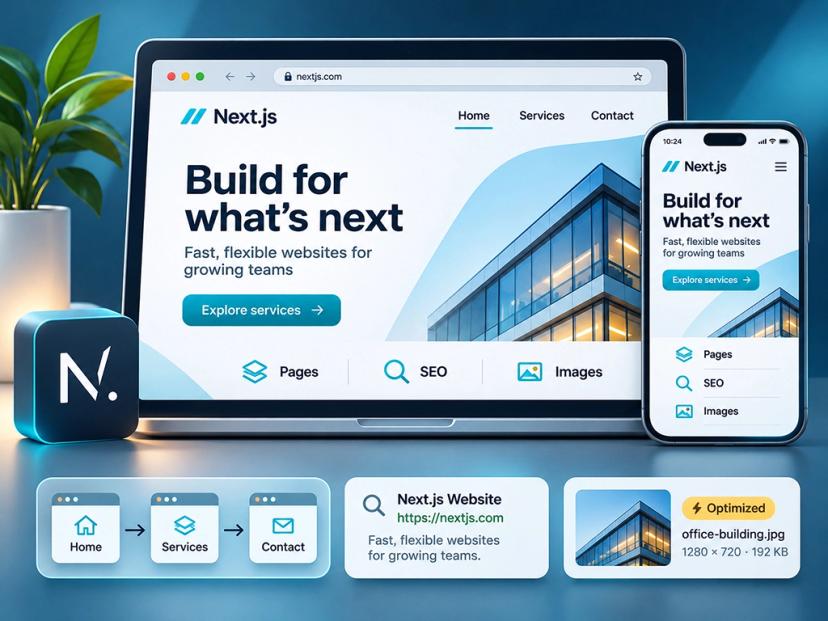
Choosing the right technology is an important part of building a website. Next.js is a framework built on React that developers use to create websites and web applications. It includes tools for page routing, rendering, metadata, and image handling.
For businesses planning a custom website, these features can provide a flexible foundation. The results still depend on how the site is designed, developed, and maintained, but Next.js gives developers several useful options in one framework.
What is Next.js?
Next.js is a framework for building web applications with React. It adds features and conventions that help developers organize pages, handle navigation, and choose how parts of a website are rendered.
That makes it suitable for different projects, from business websites and blogs to more interactive web applications. The right setup depends on the project’s content, functionality, and long-term needs.
1. Flexible ways to render pages
Different pages have different requirements. A company profile page may have content that changes infrequently, while a dashboard may show information that changes for each user.
Next.js supports multiple rendering approaches, giving developers options for how and when page content is prepared. With the right approach, a team can make decisions based on the needs of each page instead of treating every page the same way.
2. Built-in page routing
Next.js uses a file-based routing system. In the App Router, developers organize routes using files and folders in the app directory. This can make it easier to structure a project as it grows and add pages such as services, articles, product details, or customer areas.
Next.js also includes navigation features that can help pages feel responsive when visitors move through the site. Good results still depend on the site’s implementation and the way its pages and data are organized.
3. Tools for metadata and sharing
Every important page should have a clear title and description. Next.js provides metadata features that developers can use to set page titles, descriptions, and social sharing information.
This helps search engines and social platforms receive relevant page information. Metadata alone does not guarantee better search rankings. Useful content, sound site structure, and other SEO work also matter.
4. Image handling options
Images can affect how quickly a page loads, especially when they are large or used without consideration for the visitor’s device. Next.js includes an Image component with image optimization features that developers can configure for a project.
Images still need to be prepared and used thoughtfully. Choosing suitable dimensions, formats, and compression helps keep pages practical for visitors on different devices and network connections.
5. A foundation for interactive features
Some business websites need more than informational pages. They may include booking forms, customer accounts, product filters, or dashboards. Next.js supports both server and client components, which developers can use to build pages with different levels of interactivity.
This can be useful when a project needs to combine public-facing content with interactive features. The exact structure should be planned around what users need to do.
6. Room to expand
A business website may begin with a few pages and later need a blog, product catalogue, booking flow, or customer portal. Next.js can support a range of website and web application requirements, so teams can build on the same project as needs change.
Planning still matters. Adding features over time works best when the project has a clear structure and the team considers future requirements early.
Is Next.js right for every website?
No single framework is the best fit for every project. A small website with a few simple pages may not need the flexibility of a custom Next.js build. A site with custom layouts, dynamic content, or plans for interactive features may benefit from its development options.
Consider your content, features, budget, maintenance plan, and the people who will manage the site. The technology should support your goals without adding complexity you do not need.
Build a website around your goals
Next.js offers developers flexible rendering choices, file-based routing, metadata tools, and image handling features. These capabilities can support a wide range of websites, but the quality of the final result depends on how well the project is planned and built.
If you are considering a custom website, start by outlining what your visitors need and what your business wants the site to achieve. ByDev24 can help you plan and build a website that fits your requirements.
For help planning or building your website, explore our web development services.
Planning a website for your business?
Explore ByDev24's web development service or get in touch to discuss your project.
About the author

Written by
ByDev24
ByDev24 is a Delhi-based digital agency that builds websites, web applications, and mobile apps for businesses.